
Instagram Shop vs. Your Own Online Store: Why 2026 Is the Year to Move Off the Feed
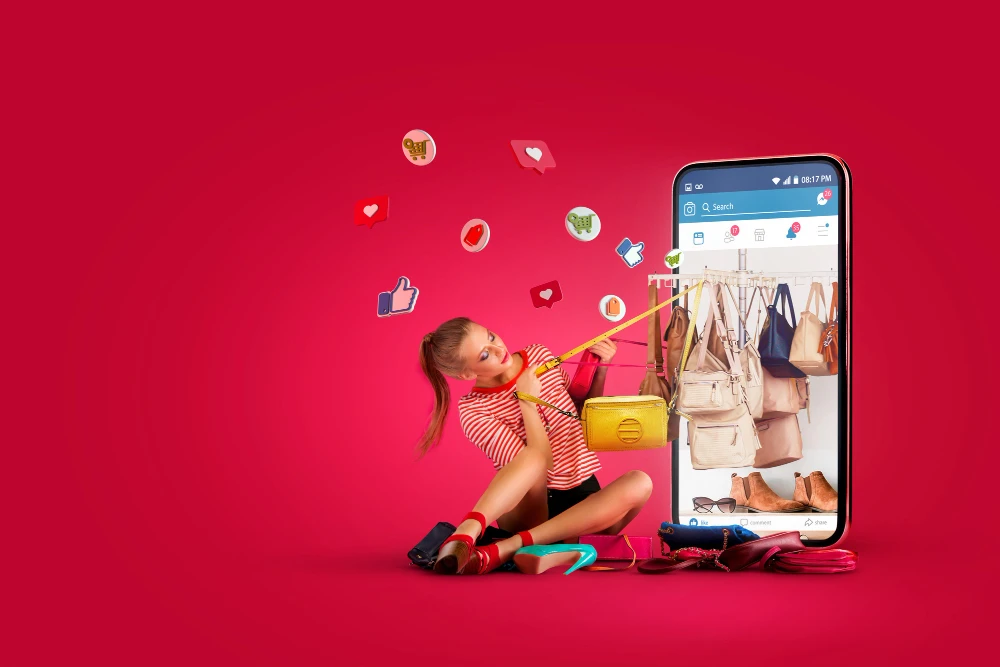
If your entire business lives inside Instagram DMs, you already know the drill: a customer comments “price?”, you reply, you send a screenshot, you confirm the address in chat, you calculate delivery manually, and you hope they don’t ghost. It works — until it doesn’t scale. This guide compares selling on Instagram versus running your own online store, and shows how to move off the feed without abandoning the audience you built there.
Instagram shop vs. online store: the core difference
The difference comes down to one word: ownership. On Instagram, you rent access to an audience the platform controls. On your own store, you own the storefront, the checkout, the customer list, and the data. Instagram decides who sees your posts; your store shows up in Google when someone searches for what you sell.
That doesn’t make Instagram useless — it’s one of the best discovery engines ever built. It makes it incomplete. Discovery without a proper checkout is a leaky funnel.
| Factor | Instagram shop | Your own online store |
|---|---|---|
| Who owns the audience | You | |
| Checkout | Manual (DMs, screenshots) | Automated cart + payment + COD |
| Reach | Algorithm-dependent | Search + direct + social combined |
| Customer data | Limited | Full — emails, orders, behaviour |
| Trust signals | Profile only | Reviews, SSL, policies, branded domain |
| Scaling to 100s of orders | Painful | Built for it |
Where an Instagram-only shop starts to hurt
- Manual checkout caps your volume. Every order is a conversation. Ten a day is fine; a hundred is a full-time job of copy-pasting.
- You can’t be found on Google. Nobody searching “buy [your product] near me” lands on your Instagram grid. That demand goes to whoever has a website.
- Reach is rented. An algorithm tweak or a temporary ban can erase your storefront overnight. You have no backup because the audience isn’t yours to export.
- Trust has a ceiling. Serious buyers hesitate to send money over DMs. A branded domain, an SSL padlock, reviews, and a real returns policy convert the cautious buyer that Instagram can’t.
What an online store adds that Instagram can’t
A proper store isn’t just a prettier catalogue. It changes the economics of your business:
- A real checkout — cart, quantities, shipping rules, and payment (including cash on delivery) handled automatically instead of in chat.
- Search traffic — product pages that rank in Google bring buyers you never paid to reach.
- Owned customer data — emails and order history you can remarket to, so you’re never starting from zero.
- Automation — abandoned-cart recovery, WhatsApp order notifications, loyalty points, and waitlists that run without you.
“But building a website sounds expensive and slow”
That objection is why most sellers stay stuck on Instagram. Historically, a real ecommerce site meant thousands of dollars upfront, months of back-and-forth with a developer, and ongoing maintenance you didn’t sign up for. That math no longer holds.
With a Website-as-a-Service model, a full store is a monthly subscription, not a capital project. GoMema plans start at $149/month, the team builds the store for you from ready templates, and most stores go live in a few business days — with cash on delivery, WhatsApp notifications, and no transaction fee on your sales.
How to move off the feed without losing customers
- Keep posting on Instagram. Don’t abandon your audience — redirect it.
- Launch a branded store with your products, logo, and domain (a done-for-you service handles the setup).
- Update your bio link and add “Shop now” to stories and highlights so the store becomes the destination.
- Move checkout out of DMs. Reply to “price?” with a product link, not a screenshot.
- Turn on WhatsApp notifications so customers still get that personal, chat-based confirmation — automatically.
You lose nothing and gain a checkout, search traffic, and a customer list you actually own.